As the election fever heats up, our major political parties are talking about how they will create 500,000 jobs in five years or give US$ 10,000 dollar accounts and 10 GB data free to students or make Nepal the biggest AI hub around town. Well, they will promise us anything knowing that none of it will be fulfilled because they are used to coming up with outlandish plans while we are used to listening to them and rolling our eyes.
What is wrong with our Education system? More than 10 million students should be in school, be it primary or secondary or colleges but it seems than only 8 million are in school and 2 million have gone missing somewhere. And don't tell me that I will bring up the Pareto formula in today's story again. Well, I just did. I guess I can't get rid of the Pareto from my system anytime soon. Nothing do with consequences but I seem to be obsessed with the 20% of anything.
It is reported that the missing children from school have no choice but to join the labor market and work for pennies, be exploited as domestic helps, factory worker and many face sexual and physical abuse as well.
I think our Education budget is like US$ 1.5 billion, a little more than 10% of our government's annual budget and in the past twenty years, all we can boast is that literacy rate has increased from less than 50% to almost 80% in the country but just being able to read and write is not going to help the people move ahead in life. We need to develop skills be it technical or anything creative which can help them to live a sustainable life in the future.
First let us do the math. The Education budget is of course for our government schools. More than 80% of the students go to government schools and more than 80% of the budget goes to pay the government teachers. I hear that we have like more than 300,000 teachers in Nepal and more than 60% are government teachers paid by the State. Successive governments had promised to increase the education budget by 20% of the annual budget but in reality, it has been decreasing percentage wise in the past decade.
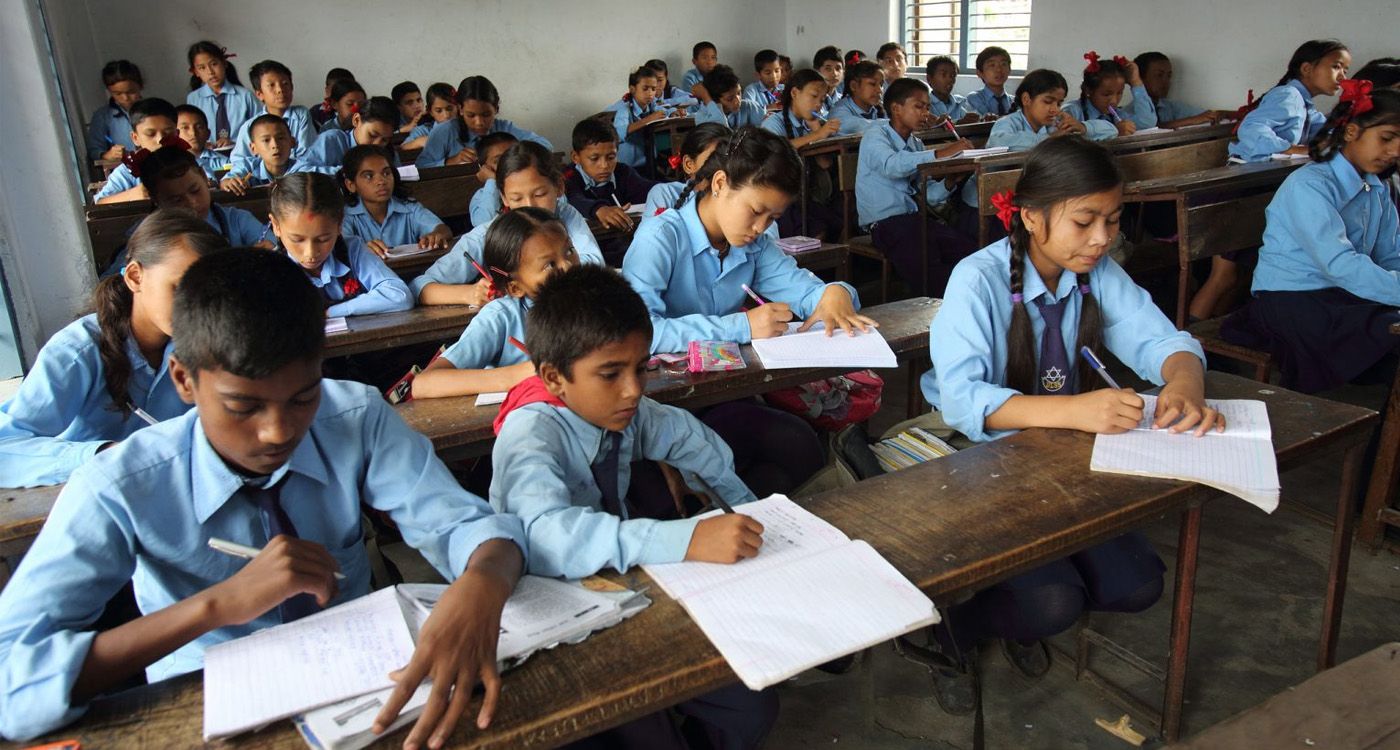
When you look at the conditions of the government schools, most of them lack even basic infrastructure and still function when Dr. Baburam was studying in Gorkha and that was probably in the 60s. Most of them are just tin roofs with wooden benches and tables and chalk-friendly blackboards. In many of these schools, there are more teachers than students and most of them spend their time doing nothing but enjoying the sun or playing cards or doing some needle work or some just do politics.
Government teachers are paid more than Rs 40,000 a month in salary and perks while private school teachers make less than half of it and only a few private schools pay 50 grand a month but those schools seem to charge 50,000 a month for each student as well.
If we really do want to reform the education system then we don't need to waste our money hiring our experts and forming committees and just adding more government school teachers or doing all kinds of cosmetic changes while the kids never get to learn something new.
In my personal opinion, we just ask the Finnish to come here and overhaul our education system. They seem to be doing fine. We need to start at the foundation not at the end when students are already almost into college. If we start now, in 25 years, maybe then we will be the Finns and have our own Nokia or Motorola or Ericsson. We just follow what the Finns, the Swedes and the Danish people have been doing for the past 50 years and then we can also become the most happiest and most content people on Earth.
Our whole education system is based not on learning and critical thinking and finding creative ways to solve problems but memorizing like parrots. It is based on rote-learning and the only winners are the textbook publishers who seem to sell the books for Rs 500 when their production cost is less than 20% of the selling price. I guess the commission goes to the private school owners and middlemen and somebody higher up.
And when it comes to our government textbook publishers, I think it is very ironic that our ballot papers can be printed in less than a month but every new school season, textbooks never arrive on time for our government schools and some of the arrive at the end of the school season just to make sure that the delivery has been completed for the sake of the payment.
It's time the government also fix the school fees ceiling. I think it should be tied to the GDP per capita and for us, it is only US$ 1,500 at max per year. And do you know what is the average monthly tuition fees in private schools in the country? It is around Rs 15,000 per month when they add up so-called digital learning fee, extra-curriculum fees and what not.
So let's do some math again. If the average person is making Rs 218,000 per year then how on Earth is he or she supposed to pay more than 80% of his average earnings to send a child to a private school? You might then argue with me and say they can always send their kids to government schools. Yes, that's true and if we can also make it mandatory for all civil servants and politicians to send their kids there as well then there might be vast improvements in our public education system.
Nothing adds up in our country but we still continue to move along as if it's all fine and dandy. One of my friends runs a private school. He started with a Rs 1 Karod investment (around US$100,000) and in ten years, he and his 40+ partners have invested more than Rs 20 Karods ( around 2 million dollars at then dollar rate but less than US$1.5 million if we calculate today's rate). Well, let us not get into the Forex business today.
Anyways, he tells me that when will we recoup his 20 Karod investment? This is what happens when everything is a business in our land. The government wants all schools be run by non-profit trusts rather than as a private businesses entity but the private schools have been pushing back the idea for ages. And they have a good lobby as well since they are also major donors to our major political parties.
My friend's school has around 500 students. He charges Rs 18,000 which also includes food and the so-called extra and extra fees here and there. He tells me that the tuition fee is only Rs 9,000 and the rest are transport, food and the extra charges. Okay, I get it. Let us assume that you make no profit on the extra charges. 500 students x 9.000 students x 12months = 5.4 crores. If the teacher student ratio is 1:10 then you need 50 staff and maybe 50 other support staff as well. You also need bus drivers, cooks, caretakers, maintenance guys and security guard!
If 100 staff are paid in average Rs 25,000 then it's 25 lakhs a month, and 3 Karods a year. The school also charges one month extra free for Dashain allowances and let us not add that if we assume that all of it goes to the staff. Revenue is around 5.4 Karod a year, salaries come to 3 Karods and lets add another 40 lakhs for annual maintenance, utility fees and other admin Expenses. I still see a 2 Karod profit a year with a 500-population private school and if it is still a 10% return and in ten years, they will recover their investment and if they own the land, it will be worth probably two times more by then.
My friend tells me that he wants at least 100 students in a class with 4 sections of 25 each and then he will be able to fully recover his investment in 5 years.This is how most of us think when it comes to starting any businesses as well. We have to be profitable right away and then make tons of money in a short span of time instead of planning for a long-term future and reaping dividends for the rest of your life. And we blame our politicians for having short-term vision, don't we?
Many of our private schools also have faced shut down or have managed to merge with other schools to survive but once you get the license then that is all it matters like the hydro license or taxi license. Why? Because our government is always good at stopping all new entrants in any industry sooner or later and jacking up the license fees hundred times to prevent new ones from entering any market to make it better.
Instead of a free economy, we have become a mafia-like license based system where the old ones continue to reap the benefits while fleecing the consumers and in this case our students or the parents who have to fork up ridiculous fees to keep their kids in private schools.
Hopefully our new government will come up with a better education plan for our kids. My words of advice would be that each school bag must not weigh more than 1 kg excluding the tiffin box and water bottle. All books should be stored in the classroom and all school work must be completed there and not bring back tons of homework and make both the students and the parent work another two hours when they get back home finishing the school work.
And we should make it mandatory that all kids from grade 1 in our government schools should start with English lessons and all students, both public and private ones should also learn a foreign language other than English. Give them a choice. I think the Chinese will rule the world by 2050 so if our kids start learning Mandarin and if we can have a million Mandarin speakers, a million French, Italian, Spanish and Arabic speakers by the time these kids are 16 then they will have better opportunities to connect globally and make an impact in the world.
Not all of our kids will be doing well academically. Some will be good at technical stuff, some will be creative. We need to give a space to all of them. Ask the Germans to come in and open a vocational university which can produce 250,000 highly-skilled electricians, plumbers, painters and people needed to assemble vehicles and what not. Around half a million young students sit for the SEE each year and only 50% pass. And only 20% of the passing ones go on to graduate from colleges.
Let us produce more skilled workers so that those who may not find academic success and go on to work in their so-called professional fields can go the vocational route and even find highly-paid jobs in the West and developed nations facing shortages of skilled labor. If we start now, we can accomplish this in ten years. And in 25 years, who knows we might be manufacturing our own vehicles and chips and smartphones and many other cool stuff?
image credit: Borgen Magazine